
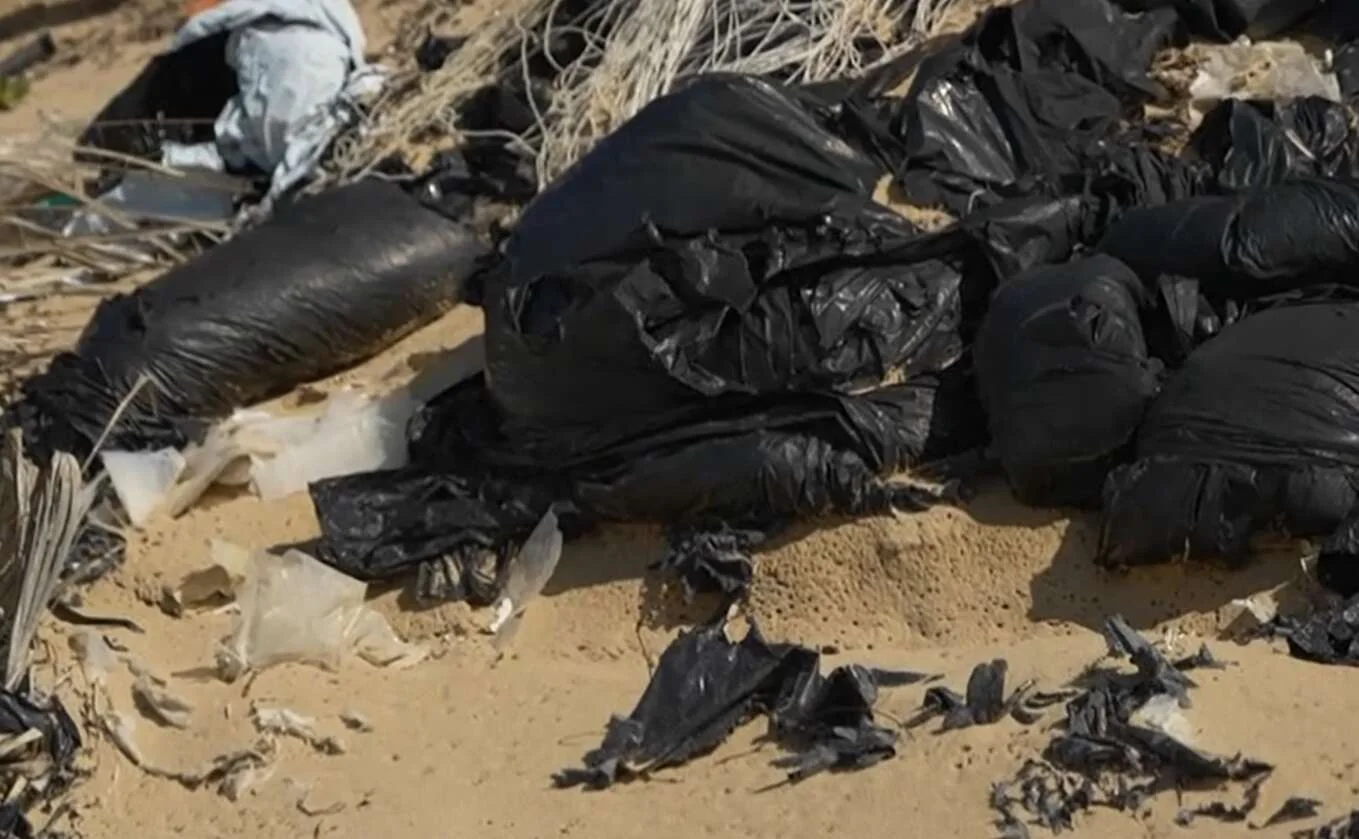
Four years of waiting, a judicial seizure covering 62,000 square meters, and an investigation into environmental disaster: the Macconi beach, in the Ragusa area, is still far from a complete cleanup. In late August 2026, manual removal of surface waste began on a stretch of just one kilometer, but the plastic and non-biodegradable materials buried beneath the dunes remain in place.
Tracing this story means reckoning with years of announcements, unanswered parliamentary questions, and projects that never received funding. It’s a story at risk of being forgotten, despite involving kilometers of public coastline in the heart of the Mediterranean.
The 2020 Discovery: Waste Buried Up to Five Meters Deep
The first inspection dates back to August 2020, when Admiral Aurelio Caligiore, then head of the Coast Guard’s Marine Environmental Department, was tasked by Environment Minister Sergio Costa with assessing the state of the coastline between Marina di Acate and Scoglitti. What emerged was far worse than what Sicilian environmental associations had reported.
The waste wasn’t simply lying on the surface — it had been buried and covered with sand, with layers of covering reaching depths of up to five meters in some spots. The material found consisted mainly of plastic and greenhouse-farming waste from the area, but also included appliances, concrete posts, and fiberglass boat parts.
The 2022 Seizure and the Environmental Disaster Investigation
In January 2022, the Pozzallo Port Authority ordered the seizure of about 62,000 square meters of beach, spread across seven kilometers in the Macconi area. The Ragusa Public Prosecutor’s Office opened an investigation into environmental disaster, illegal dumping, and unauthorized occupation of state-owned maritime land, initially against persons unknown.
The Port Authority immediately clarified that the seizure was only a starting point: it was to be followed by quantification of the waste, its classification, and finally the drafting of a cleanup plan involving regional and municipal authorities. A path that was announced but never truly set in motion.
Years of Parliamentary Questions and Projects Left on Paper
Between 2022 and 2024, the matter passed through parliamentary and regional chambers without producing concrete results. A 2024 inquiry at the Sicilian Regional Assembly reported that the Marina di Acate coastline was still overrun with plastic, pesticide containers, polystyrene, and even asbestos sheets.
In the Chamber of Deputies, it was reiterated that the 2022 seizure had not produced any tangible results. The mayor of Acate wrote again to the Environment Minister and to the Directorate for Natural Heritage and the Sea, requesting urgent action — the outcome of that request was never made public.
The 2026 Intervention: One Kilometer Cleaned, €25,000, 38 Days
On August 24, 2026, the newspaper La Sicilia reported that a contract had been awarded for manual cleanup and removal of surface waste on about one kilometer of the Macconi state-owned beach, in the municipality of Vittoria. The intervention involves 38 working days and a contract value of €25,000.
The operations must be carried out manually, in accordance with requirements dictated by the site’s conditions. A concrete step forward — but one that leaves the main issue untouched: the waste buried deep along the entire stretch under seizure has still not been addressed.
Why This Still Isn’t a Cleanup
Removing visible waste from one kilometer of beach is in no way equivalent to remediating the seven kilometers of coastline where non-biodegradable materials have lain buried under the dunes for years, likely decades. The current intervention involves no excavation, does not quantify the buried materials, and does not address the risk of contamination to groundwater and the sea.
As observers who have followed the story for years have noted, the operation looks more like a cosmetic fix than genuine environmental remediation. Until a systematic excavation plan is approved and funded, the problem will remain hidden exactly where it has always been: under the sand.