
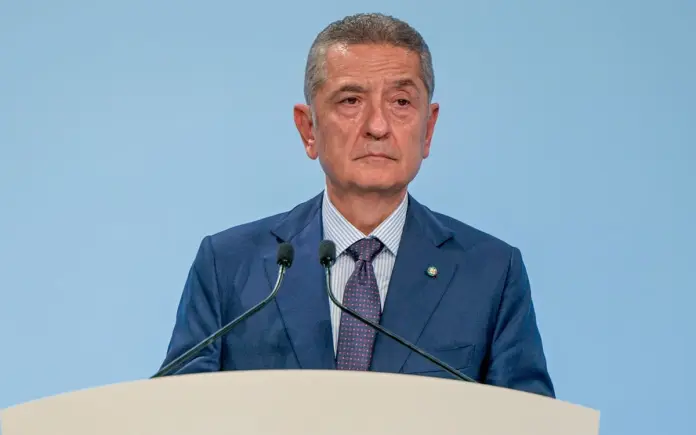
Climate change is no longer a distant threat. That was the message from Bank of Italy Governor Fabio Panetta, who opened the Green Swan Conference 2026 in Manila with a figure that captures how fast the problem is growing: in 2025, extreme weather events caused more than $200 billion in direct damage, over twice the level of the early 2000s.
A risk already weighing on the economy
According to Panetta, what was once seen mainly as a problem for future generations is already shaping economic and financial conditions. Some climate-related damage is now unavoidable, which makes resilience increasingly important.
The Governor urged that climate risk stop being treated as a stand-alone compliance exercise and instead be built into the assessment of credit, market, operational and insurance risk.
Prevention is cheaper than rebuilding
Investment in prevention was a central theme of the speech. “Adaptation is generally less costly than repeated reconstruction,” Panetta said. The aim is for economic and financial systems to absorb climate shocks without letting them escalate into broader crises.
Closing the insurance protection gap
A large share of losses from natural disasters remains uninsured. This gap leaves households and businesses exposed to serious hardship and forces governments to step in after the fact, at significant fiscal cost.
Panetta argued that insurance does more than compensate for losses: when risks are priced correctly, coverage creates financial incentives to reduce exposure. Closing the gap requires a multi-layered model combining private insurance, reinsurance, public guarantees and capital markets, with the state acting as a backstop for the most extreme events.
Italy has moved in this direction by introducing mandatory insurance against floods, earthquakes and landslides for non-agricultural businesses, backed by a public guarantee. The goal, the Governor explained, is to prevent losses from falling on those least able to bear them, or from threatening the financial system as a whole.
Artificial intelligence: opportunity and new costs
Finally, Panetta acknowledged the potential of artificial intelligence to improve climate models and early warning systems. But he warned that the expansion of data centres is driving up demand for energy, water and critical raw materials. These pressures must be managed so that digital innovation strengthens resilience rather than creating new vulnerabilities.
New tools cannot replace reliable data, sound models or human judgement, he concluded, but used carefully they can help anticipate shocks before risks materialise.