
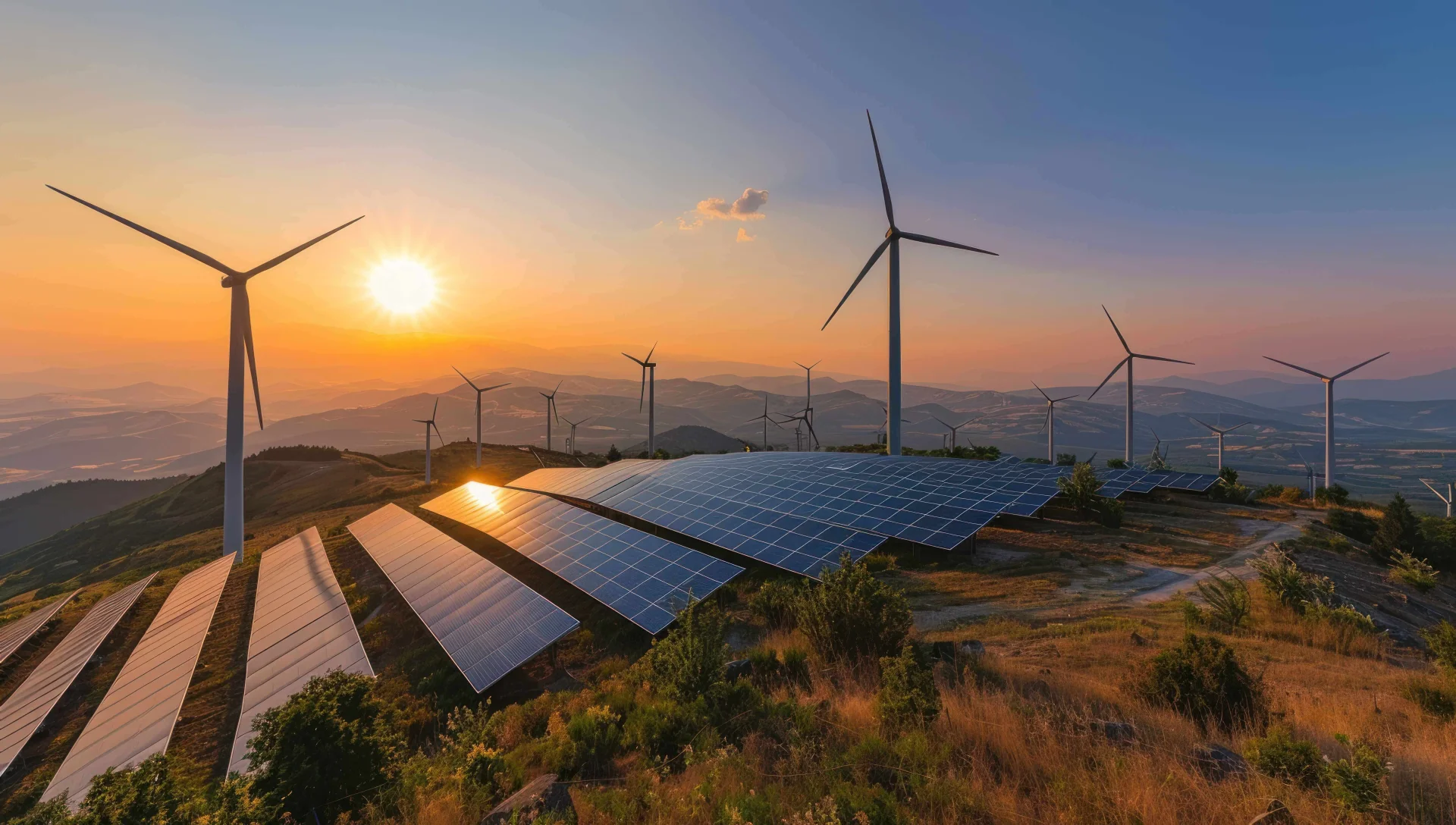
For years, the rise of renewables was framed as a fight against climate change, helped along by the collapsing cost of panels and turbines. The International Energy Agency’s new “Renewables 2026” report shifts the lens: today, the main force behind solar and wind is energy security. Geopolitical tensions and recent turmoil in oil and gas markets have pushed a growing number of countries to bet on clean power as a way to cut their reliance on imported fuels. The outcome, according to projections to 2031, is an unprecedented acceleration, with China firmly in the lead and Europe at risk of losing ground to slow permitting and inadequate grids.
From climate to security: a new engine for the transition
IEA Executive Director Fatih Birol puts it simply: environmental concerns used to be the political priority behind renewables, but energy security is now the main driver of their expansion, as more and more countries try to reduce their exposure to imported fuels. Governments, businesses and households are turning to clean energy not just for environmental reasons, but as a shield against volatile fossil fuel prices and supply disruptions.
The numbers: almost 4,800 GW in six years
Between 2026 and 2031, global renewable capacity is expected to grow by almost 4,800 GW, roughly 60% more than the 3,000 GW added in 2020–2025. That expansion will see renewables generate nearly 45% of the world’s electricity in 2031, up from 33% in 2025. Output from solar and wind combined will more than double, reaching over 28% of total generation.
Solar takes the lead
Solar PV has already overtaken wind and, according to the IEA, will surpass hydropower in 2029, becoming the world’s largest source of renewable electricity. On its own, it will account for more than three-quarters of new capacity added through 2031, followed at a distance by onshore wind.
China in front, India gathering speed
Beijing remains the biggest engine of global growth: after adding 1,698 GW in 2020–2025, it is forecast to add 2,518 GW in 2026–2031. Its share of the global total will ease slightly, from over 60% in 2025 to an average of 53%, partly reflecting shifts in domestic policy. Close behind is India, now the world’s second-largest growth market: new capacity is set to climb from 152 GW in 2020–2025 to 399 GW over the forecast period. India is also emerging as a key option for diversifying global supply chains, with its share of world solar module manufacturing expected to double to 17%.
Europe: big ambitions, held back by permits and grids
Europe is on track to add 482 GW of renewable capacity between 2026 and 2031, up from 373 GW in the previous six years. The EU is also highlighted for its push on heat pumps, building efficiency and electric vehicles. But the IEA warns that annual growth could plateau or slow because of lengthy permitting procedures, red tape and, above all, delays in grid connections and limited transmission capacity. These bottlenecks could leave Europe trailing behind Asia’s largest economies.
Emerging markets and small-scale solar: a bottom-up transition
For the first time in recent history, new capacity added in emerging and developing economies (excluding China) will match that of advanced economies. In Southeast Asia, the Middle East, North Africa and sub-Saharan Africa, additions in 2026–2031 are expected to nearly triple compared with the previous six years. Households and small businesses facing high bills and unreliable supply are also part of the wave: residential and commercial solar has already improved electricity services for around 70 million households.
Transport and heating: electrification and biofuels advance
In transport, renewable energy use is set to grow by more than 60% by 2031, covering 6% of the sector’s energy demand. Alongside electrification, biofuels are the second pillar of growth: after price and supply pressures on fossil fuels, several countries in Southeast Asia and Latin America raised blending mandates, prompting the IEA to revise its biofuel forecasts upward by 40%. In heating, both in Europe and China, clean electricity remains the main driver of renewable heat, although the heat pump sector needs stable incentives and regulation to keep pace with building decarbonisation targets.
The grid challenge
The momentum is clear, but not guaranteed. To fully harness the growth of solar, the IEA says, governments need reforms to speed up grid connection permits and massive investment in transmission networks. It is a challenge for everyone, but for Europe it is already the real battleground of the transition.