
Wetlands are among the most precious and fragile ecosystems on the planet. Lagoons, ponds, marshes, peatlands and springs host an extraordinary wealth of life, but in Italy their decline has reached alarming levels: three out of four have already disappeared.
To raise awareness of their role in protecting biodiversity and fighting the climate crisis, WWF is relaunching its Spring of Oases, a national initiative that opens more than 100 protected areas across Italy to the public.
Wetlands: a natural heritage under pressure
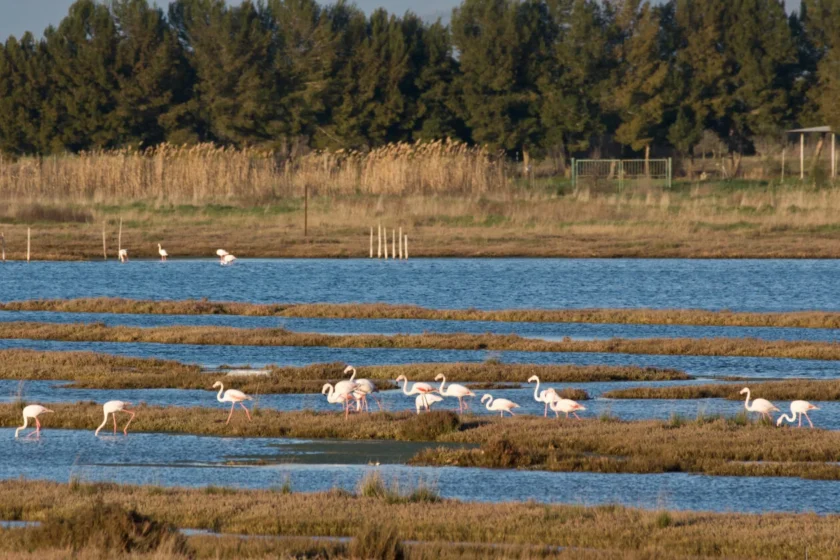
Wetlands cover only a limited portion of the national territory, yet they perform essential functions for the environment and for community safety.
According to the data highlighted by WWF, almost 40% of the remaining wetlands in Italy are in an inadequate state of conservation. Their loss contributes to worsening phenomena such as drought, floods, extreme weather events and biodiversity decline.
These ecosystems absorb excess water during heavy rainfall, reduce the risk of flooding, improve water quality and help mitigate climate change thanks to their ability to store carbon.
Biodiversity and climate crisis: why wetlands are crucial
The disappearance of wetlands is closely linked to biodiversity loss. The species most affected include amphibians, freshwater fish and aquatic birds, groups that are particularly vulnerable to habitat transformation.
Despite their fragility, these environments remain true biodiversity hotspots, comparable in species richness to tropical forests.
They are also essential areas for millions of migratory birds travelling along Euro-African routes, which rely on marshes, lagoons and ponds as key places to rest, feed and reproduce.
WWF Oases as conservation strongholds
The history of WWF Oases in Italy began 60 years ago with Lake Burano in Tuscany. At the time, it was a wetland threatened by hunting and environmental degradation. Thanks to the vision of Fulco Pratesi and the Association’s pioneers, that area became the first WWF Oasis in Italy.
Today, Lake Burano is a State Nature Reserve covering more than 400 hectares, a Ramsar site and a key reference point for the protection of aquatic birds, with over 300 recorded species.
From that first experience, a conservation model based on concrete action was born: habitat protection, sustainable water management, ecological restoration and the recovery of degraded environments.
Over 100 protected areas across Italy
WWF now manages a network of more than 100 Oases across the country. Of these, 78 include wetlands and protect 11 of Italy’s 66 Ramsar sites, internationally recognised for their ecological value.
The Oases are not only places to be protected, but real laboratories of environmental regeneration. Here, work is carried out to rebuild damaged ecosystems and create the conditions needed for the return of rare or threatened species.
This approach is in line with the European Union’s Nature Restoration Law, which introduces binding targets for ecosystem restoration by 2030, with further milestones set for 2040 and 2050.
Symbolic species and concrete results
Among the species at the centre of WWF’s conservation efforts is the European pond turtle, now protected also through the LIFE URCA PROEMYS project, which includes habitat restoration, control of invasive alien species and controlled reintroductions.
Particular attention is also given to the Italian spadefoot toad, an endemic amphibian listed as endangered by the IUCN, and the Lataste’s frog, a species found only in the Po Valley.
Oases such as Baraggia di Bellinzago, Bosco di Vanzago and Le Bine host breeding, renaturalisation and monitoring programmes, proving that conservation can deliver concrete results when it addresses the root causes of decline.
In some areas, species once close to disappearing have returned to breed in the wild.
The role of researchers and women in environmental protection
The protection of wetlands also depends on the daily work of researchers, naturalists and field operators.
Among the symbolic figures of this commitment is Stefania D’Angelo, director of the WWF Oasis Lago Preola e Gorghi Tondi in Sicily. The Ramsar Convention selected her among the 12 women worldwide who are leading wetland protection efforts.
Before WWF arrived in 1999, the area was marked by degradation. Thanks to the work carried out in the field, researchers also established that the pond turtle living in the local water bodies belongs to an endemic species, or subspecies: Emys trinacris, found only in Sicily.
Spring of Oases: events for the public
With the WWF Spring of Oases, more than 100 protected areas are reopening to the public with guided tours, workshops, birdwatching activities and initiatives dedicated to the discovery of aquatic habitats.
On the occasion of World Migratory Bird Day, celebrated on May 9, several events are scheduled in Italy’s main marsh and lagoon Oases.
Initiatives include the “pond workshop” at the WWF Oasis Ca’ Brigida in Emilia-Romagna, the opening of the Levandina Oasis in Lombardy, a meeting dedicated to the otter at the WWF Oasis Lake Campolattaro, guided visits to the coastal lagoon of Le Cesine in Apulia, and excursions in the Orbetello Lagoon in Tuscany.
Events will continue until June 2, with nature walks and educational activities dedicated to the protection of aquatic species and ecosystems.
An investment in the future
The crisis affecting Italy’s wetlands is not only a matter of nature. It concerns water security, protection from climate risks, quality of life and the future of biodiversity.
WWF Oases now represent essential conservation strongholds, capable of protecting fragile environments while also bringing citizens, families and communities closer to the concrete value of nature.
Saving wetlands means defending one of the most effective allies against the climate crisis and ensuring a safer future for ecosystems and people.