
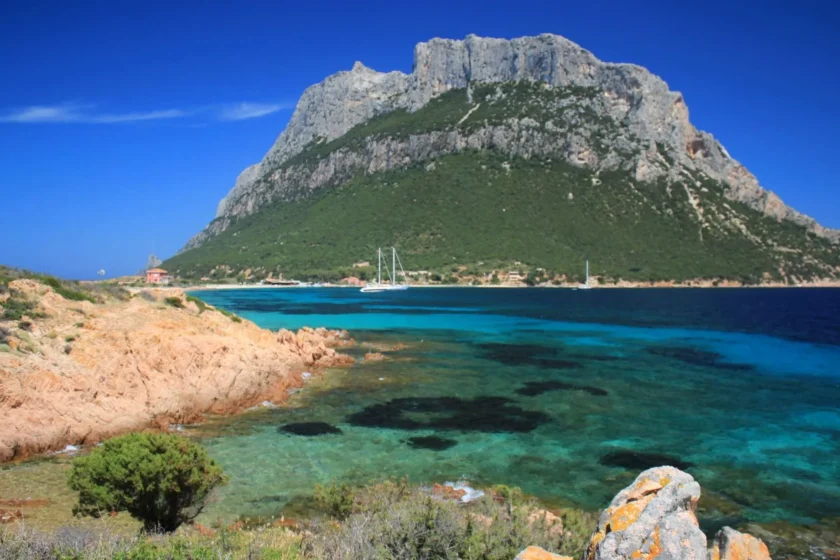
The Tavolara Bay tourism project in Cala Finanza, in the municipality of Loiri Porto San Paolo, has intensified the political and environmental debate in Sardinia. At the center of the case is a tourism development plan that, according to WWF, could affect a coastal area of major natural and landscape value.
The project received approval from the Government through the simplified procedure of the single SEZ for Southern Italy, despite the negative opinion of the Sardinia Region. The environmental association describes the decision as serious and capable of creating a dangerous precedent.
The Cala Finanza project and the protected areas issue
The area involved in the project lies along one of Sardinia’s most delicate coastal stretches, overlooking the Tavolara-Punta Coda Cavallo Marine Protected Area and close to habitats considered highly valuable.
According to WWF, the plan submitted by Tavolara Bay S.r.l. involves the urban transformation of an area classified as “environmental safeguard” into a new tourist zone intended for luxury accommodation facilities.
For the association, the case cannot be reduced to a simple administrative procedure. The risk identified is that of irreversibly altering an area that has so far remained substantially intact.
WWF: “A very serious attack on the landscape and the rules”
WWF says the case goes beyond a single building project. The association stresses that environmental and landscape constraints should not be seen as obstacles to bypass, but as tools for protection and enhancement.
In its statement, WWF also highlights the broader framework surrounding the case. For some time, there has been talk of a wider real estate and tourism development plan covering about one hundred hectares, with five-star hotels, villas, golf courses, a marina, shopping facilities and a heliport.
The association notes that not all of these elements are currently confirmed by formal requests. However, it considers the growing pressure on a coastal stretch that, in its view, should be protected and preserved to be evident.
Negative opinions and national approval
According to WWF, during the Services Conference, significant negative opinions emerged from technical bodies and competent administrations. The observations reportedly concerned, in particular, the lack of environmental and landscape checks deemed essential.
Despite these issues, the national single authorization provided for Special Economic Zones was granted and later confirmed by the Council of Ministers, disregarding the institutional objections raised by the Sardinia Region.
For WWF, this was an “incomprehensible and extremely serious” decision, seen as a political and administrative forcing.
The political clash in Porto San Paolo
The case has also triggered a political clash in Porto San Paolo. The minority has called for the mayor’s resignation, challenging the approval given to the operation.
The mayor rejected the accusations, describing the minority’s position as inconsistent and claiming that its vote was changed after the public attention generated in recent days.
The local dispute is therefore part of a broader debate involving not only the impact of the project, but also the relationship between tourism development, landscape protection and authorization procedures.
The precedent linked to the single SEZ
For WWF, Tavolara Bay risks becoming a test case for a distorted use of the Special Economic Zone. The tool, designed to simplify economic and productive activities, could, according to the association, become a fast track for projects affecting fragile and protected territories.
The concern is that these procedures could weaken territorial planning, landscape protection and environmental assessments. According to WWF, such a precedent would also have major consequences for other areas of Southern Italy included in the single SEZ.
WWF’s request
The association is calling for the request of the Sardinia Region to be heard, for all work to be stopped immediately and for full compliance with environmental and landscape procedures to be restored.
WWF is also asking for clarity on the anomalies that, in its view, marked the authorization process.
For the association, defending Tavolara means defending a broader principle: the environment and the landscape must not be subordinated to economic interests, but regarded as common goods protected by the Constitution and belonging to all citizens.