
With a wingspan that can reach 2.7 meters and a weight ranging from 7.3 to 11.2 kilograms, the griffon vulture is one of the most impressive birds crossing Italian skies. This large vulture, scientifically known as Gyps fulvus, lives on average for about 30 years, although some individuals can reach 35 to 40 years.
Powerful, long-lived and essential to ecosystem balance, the griffon vulture is much more than a bird of prey. It is a natural scavenger, feeding exclusively on carcasses and helping keep the environment healthy.
A symbolic animal between myth and nature
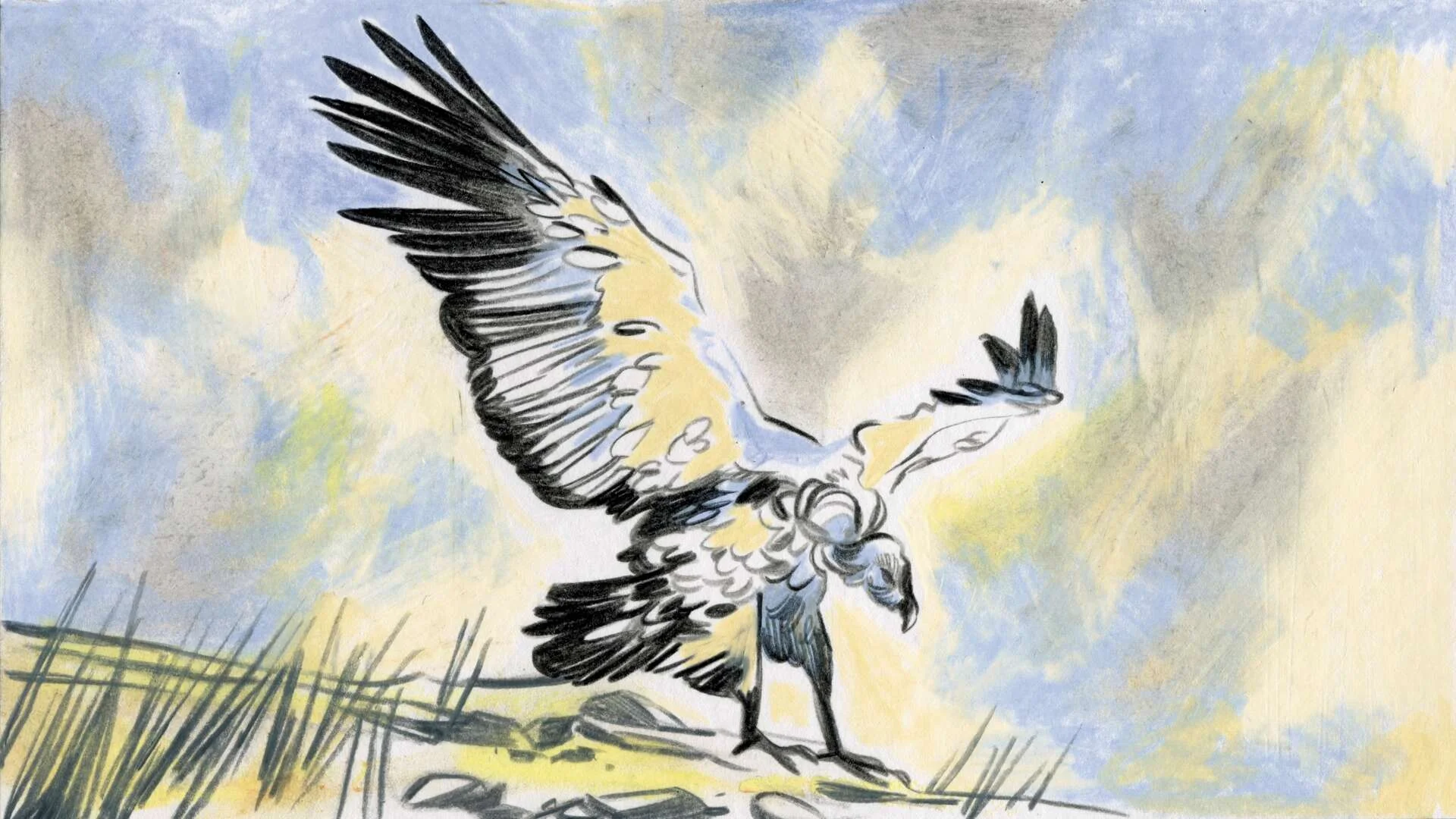
The ecological role of the griffon vulture and other vultures has helped make these birds sacred or symbolically important in many cultures throughout history.
In the New World, for example, Native peoples such as the Yurok and other Indigenous communities of the Pacific Coast regard the condor as a sacred bird, a symbol of renewal and a messenger between worlds.
Vultures also appear in classical culture as signs of divine will. According to tradition, Romulus and Remus entrusted the choice of the founder of the new city to the auspices of the gods. Remus first saw six vultures, while Romulus later saw twelve.
The ambiguity of the omen — whether priority or the greater number of birds mattered most — fueled the dispute that ended with Remus’ death and the founding of Rome.
Not at risk in Europe, still fragile in Italy
Today, the griffon vulture is not considered at risk at European level, partly thanks to the growth of some populations, especially those in Spain.
In Italy, however, its recent history has been far more fragile. During the 20th century, the species suffered a dramatic decline: the number of breeding pairs fell by 96.9% between the 1930s and 2005.
All Italian populations, except the Sardinian one, disappeared between the 19th and 20th centuries. Historically, the griffon vulture was present in the Alps, the Apennines and the two main islands.
The last population to vanish was the Sicilian one, which became extinct around 1965. It is a loss that shows how quickly a species can disappear from territories where it once formed part of both ecosystems and cultural imagination.
The griffon vulture’s return to Italian skies
In recent years, the situation has improved. In Italy, the griffon vulture moved from “critically endangered” in the 2012 national Red List to “near threatened” in the 2019 Red List of breeding birds in Italy.
According to Lipu, this improvement is mainly linked to restocking projects in Sardinia and reintroductions carried out in Friuli-Venezia Giulia, the central Apennines, Calabria and Sicily.
These conservation efforts have allowed the species to recolonize part of its original range, bringing the griffon vulture back to several areas of the country.
Where the griffon vulture lives in Italy today
The griffon vulture is currently present in Sardinia, Friuli-Venezia Giulia, the central and southern Apennines and Sicily.
The species mainly nests between sea level and 500 meters above sea level, but it can reach higher altitudes: up to 1,200 meters in Friuli-Venezia Giulia and 1,550 meters in Lazio.
The Italian population is estimated at 500 to 740 individuals, for a total of around 165 to 175 breeding pairs.
Its distribution remains fragmented:
- about 40 pairs in Sardinia;
- 45-50 pairs in Friuli-Venezia Giulia;
- 45-50 pairs in the central Apennines;
- 5 pairs in the southern Apennines;
- 30 pairs in Sicily.
The trend has been increasing in recent decades, but numbers remain small. For this reason, the griffon vulture continues to be a vulnerable species, especially because its populations are scattered and fragmented.
Threats: less food, poison and lead
The threats facing the griffon vulture are still numerous. The first concerns the reduction of food resources, linked to changes in livestock farming.
The shift from extensive and free-range systems to more semi-intensive farming concentrated in livestock facilities has reduced the availability of carcasses in the landscape. For a species that feeds exclusively on dead animals, this means less food.
Another major concern is indirect poisoning, caused by poisoned bait used against foxes and stray dogs. This is compounded by the risk of pharmaceutical residues in carcasses.
A further danger is lead poisoning, caused by lead ammunition used in hunting. It is a silent but potentially serious threat for a species that feeds on carcasses and animal remains.
An encouraging comeback that still needs protection
The return of the griffon vulture to Italian skies is a positive story of conservation, reintroductions and biodiversity protection. Yet the population remains small and divided into separate nuclei.
To secure a stable future for this great vulture, it will be essential to continue protecting habitats, reduce the use of toxic substances and ensure land management compatible with the species’ needs.
The griffon vulture has returned to many areas of Italy. The challenge now is to make sure that comeback becomes permanent.