
On the occasion of World Otter Day, celebrated on May 27, WWF is drawing attention to one of Italy’s most precious and vulnerable species: the European otter. Protecting this animal, the organization stresses, means defending an entire river ecosystem.
The sixth installment of the “Oasis Effect” report, published as part of WWF’s Spring of the Oases, is dedicated to the “lady of the rivers” and to the role protected areas play in its conservation.
The otter, an indicator of river health
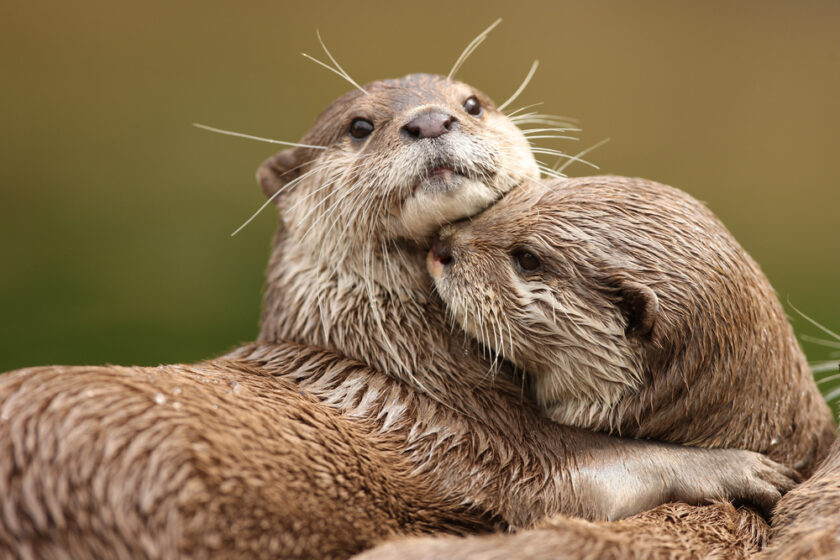
The European otter (Lutra lutra) is considered an ecological indicator of great value. Its presence generally signals waterways in good condition, with clean water, abundant fish and well-preserved riparian vegetation.
For this reason, protecting the otter does not mean safeguarding just one species, but helping to preserve a complex, fragile environment increasingly threatened by human activity.
Rivers under pressure: embankments, dams and pollution
Italy’s river environments are among the ecosystems most heavily transformed by human intervention. Embankments, dams, the removal of riparian vegetation, pollution and water withdrawals have profoundly altered the natural functioning of rivers and streams.
In this context, WWF Oases serve as essential strongholds. They protect still-vital stretches of river and provide refuge for symbolic species of biodiversity, contributing to the recovery of degraded habitats.
From the first oases to the otter’s return
WWF recalls that the first Oases were known as wildlife refuges. Created to protect migratory birds from hunting, they later became essential tools for the conservation of many endangered species.
In the 1970s, Italy’s otter population was in sharp decline and survived only in a few groups in central and southern Italy. Among the most urgent actions identified was the creation and management of protected natural areas.
Today the situation has improved: the species is showing signs of recovery at national level. A significant part of this result is linked to the protection of river habitats.
The Persano Oasis, symbol of a comeback
One of the most representative places in this story is the WWF Oasis of Persano, on the Sele River, between the Picentini and Alburni mountain ranges. Today, visitors may even happen to see an otter in broad daylight: a rare event, but now possible.
According to WWF, Persano proves that a well-protected and monitored area, set within an environmental context that has improved over time, can become strategic for the conservation of a species.
This experience led to new conservation proposals, including those linked to the Calore Lucano River, now incorporated into the Cilento, Vallo di Diano and Alburni National Park, and the Bussento Caves in Morigerati.
The role of oases in Basilicata and Abruzzo
The Lucanian oases of Bosco Pantano di Policoro, Lake San Giuliano and Pantano di Pignola have also helped support important populations for the recovery of the otter.
A significant role was also played by the Otter Centre at the Lake Penne Oasis, in Abruzzo, one of the first Italian sites to host a wildlife area dedicated to the species. Here, alongside conservation, activities focused on environmental education, training and awareness-raising were carried out.
With the species expanding across southern and central Italy, and returning to several northern areas, new oases are becoming sites where otters are either already present or being monitored, as in the case of the Cascate del Verde in Abruzzo.
Conservation also means restoration
Protecting rivers does not simply mean leaving natural environments untouched. In many cases, WWF explains, it is necessary to intervene in order to restore what has been altered.
This means encouraging the return of riparian vegetation, reducing human pressures, recreating meanders and restoring the connection between rivers and floodplains. These actions benefit not only biodiversity, but also the reduction of flood risk.
A guide species for understanding healthy rivers
The otter is not the only species linked to the quality of waterways. Better-preserved rivers are also home to fish such as barbel and vairone, as well as amphibians, kingfishers and white-throated dippers.
All these species share the same needs: oxygen-rich water, natural river dynamics and vegetation along the banks.
For this reason, the otter can be considered a true guide species. Following its needs helps us understand how a healthy river should function. When it returns to an area, it is not only the success of a conservation project: it is concrete evidence that an ecosystem can be restored.