
A little-seen phenomenon continues to affect seabirds in Italian waters as well. It is known as bycatch, the accidental capture linked to fishing activities, which according to Lipu involves thousands of birds every year. Among the most exposed species are shearwaters, seabirds that live between sky and water and return each year to the same place to nest.
Shearwaters, between open sea and fragile nests
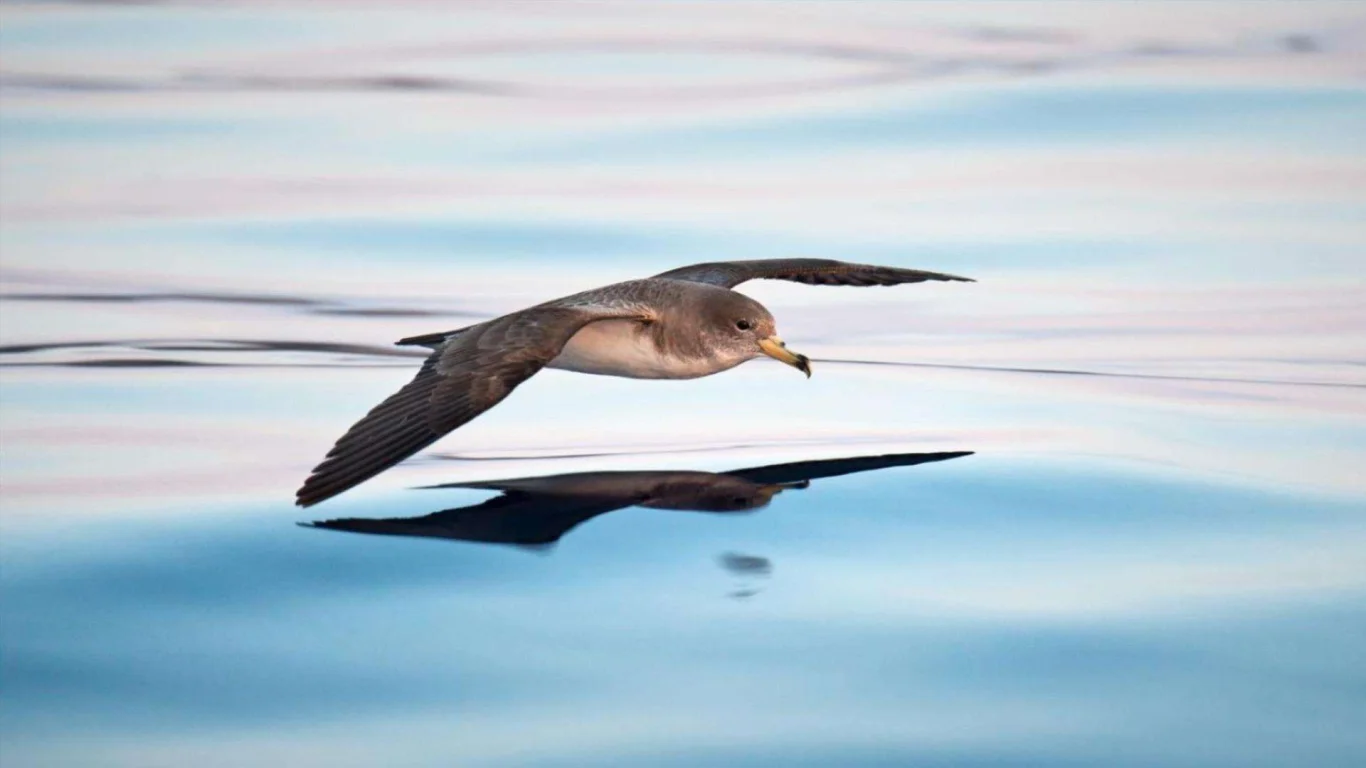
Shearwaters cross the open sea for months, following winds and currents. Every year they return to the same nest, in the same place, to lay a single egg and raise a single chick. They can live up to 50 years, but their survival is now threatened by several factors.
Among the main pressures reported are accidental capture with fishing gear, plastic pollution, invasive species and climate change. Their lives depend on an essential balance: sea, wind and safe nesting sites.
Bycatch and the risk to seabirds
During fishing activities, many shearwaters become trapped in nets or hooked on fishing lines. This is bycatch, an unintended capture that can prevent birds from returning to the surface. When an adult does not return to the nest, the chick often does not survive either.
For a long time, this phenomenon remained difficult to observe. Today, according to the Italian League for Bird Protection, the issue has been scientifically documented thanks to the work of volunteers who boarded fishing vessels to collect data, observe and describe what happens at sea.
Solutions tested with fishers
Lipu also reports the development of concrete solutions together with fishers. Among the tools mentioned are deterrent systems, such as buoys and colored strips applied to nets, designed to reduce accidental captures without stopping fishing activities.
According to the association, protecting shearwaters depends on scientific research and the use of tested, effective mitigation tools. The aim is to reduce risks for seabirds while maintaining dialogue with those who work at sea.
Data from the Pelagie Islands, Lazio and Campania
Bycatch is identified as one of the main threats to Mediterranean seabirds. The reported estimates indicate that around 200,000 seabirds are involved every year in Europe in accidental captures linked to fishing.
In Sicily, the Pelagie Islands host the second most important colony of Scopoli’s shearwater, with around 10,000 breeding pairs. The annual estimate ranges from 423 to 961 seabirds caught by drifting longline fishing alone, a system of lines with hundreds or thousands of hooks. Shearwaters are attracted by bait, swallow the hooks and remain trapped underwater.
In the central Tyrrhenian Sea, between Lazio and Campania, more than 400 Yelkouan shearwaters were found dead in just 50 days along the coast in the spring of 2025. In this case, the problem is also linked to set nets, in which birds can become entangled while diving to feed and are unable to resurface.
A balance to protect in the Mediterranean
During monitoring activities, Lipu is sometimes able to intervene in time and free birds caught in fishing gear. These are valuable actions, but they are not enough to solve the problem.
Shearwaters remind us that birds do not belong only to the sky, but also to the sea. They skim it, follow it and inhabit it. Protecting them means safeguarding a fragile balance in the Mediterranean, often hidden but essential for biodiversity.